How Civil Service Promotion Works in Nigeria – From GL 08 to GL 14 and Beyond
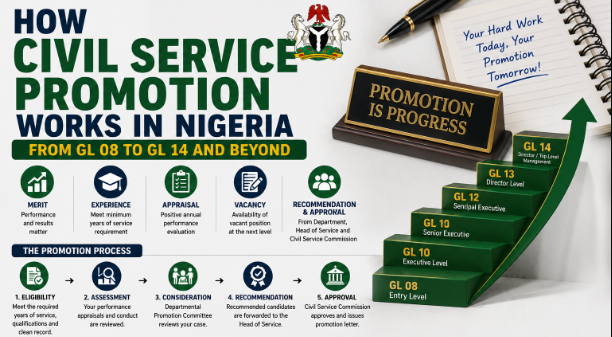
How Civil Service Promotion Works in Nigeria: Many new entrants into the Nigerian civil service focus entirely on getting their first appointment letter, without much thought for how promotion actually works once they’re in. Understanding this system early helps you plan your career path realistically, rather than being surprised by how promotion timelines actually unfold.
The Basic Structure of Promotion
Promotion in the Nigerian civil service generally follows a structured Grade Level progression, moving from your entry grade level upward in defined steps, typically GL 08 to GL 09, then GL 09 to GL 10, and so on, rather than large unpredictable jumps. Each promotion typically requires a minimum number of years served at your current grade level before you become eligible for consideration.
Promotion Examinations and Assessments
At certain grade level thresholds, particularly moving into more senior officer cadres, civil servants are required to sit a promotion examination or undergo a formal performance assessment before being considered for advancement. This is distinct from your original recruitment exam and tests different competencies relevant to increased responsibility at the next grade level.
Typical Timeline Expectations
While exact timelines vary by agency and by how promotion exercises are scheduled in a given year, many civil servants experience their first promotion within three to four years of initial appointment, assuming consistent satisfactory performance appraisals and no disciplinary issues. Subsequent promotions often follow a similar multi-year cycle, though this can be affected by budget constraints on the agency’s available promotion slots in any given year.
Performance Appraisal’s Role in Promotion
Annual performance appraisal reports, often called APER in civil service terminology, play a significant role in promotion eligibility. Consistently strong appraisal ratings build a track record that supports your case when promotion exercises are conducted, while poor or inconsistent ratings can delay otherwise eligible advancement.
Reaching Director-Level Positions (GL 15 to GL 17)
Advancement into Director-level positions, typically GL 15 and above, generally requires not just time served and strong appraisals, but also demonstrated leadership capacity, often assessed through structured interviews or panels specifically for senior appointments, since these roles involve managing entire departments rather than individual tasks.
A Practical Tip for New Entrants
Keep your own personal record of appraisal scores, training certifications completed, and any commendations received throughout your career, rather than relying entirely on your agency’s internal HR records. Having this personal documentation readily available strengthens your case whenever promotion exercises or panel reviews come up.