How to Get Your Local Government Indigene Certificate (Step-by-Step for Every State)
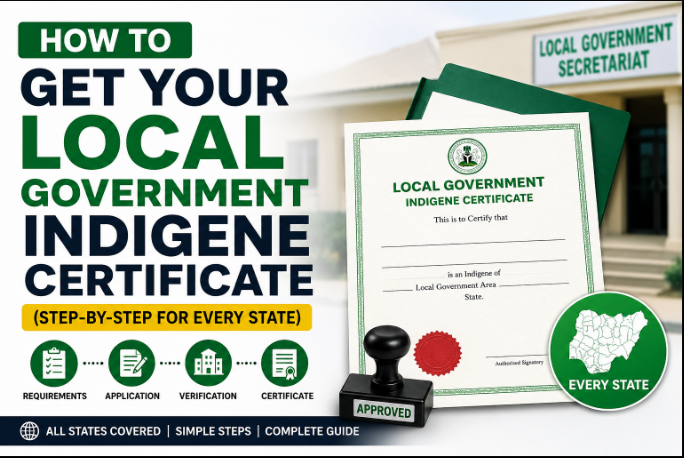
How to Get Your Local Government Indigene Certificate: An Indigene Certificate is one of the most frequently requested, and most frequently delayed, documents in any Nigerian government recruitment process. It formally proves that you originate from a specific Local Government Area, which matters enormously for federal character allocation in federal recruitment, and even more directly for state-level recruitment, where most states only consider applicants who can prove indigene status. Despite how often it’s required, very few people understand exactly how to get one, or how long it realistically takes.
What an Indigene Certificate Actually Proves
It’s a formal, signed and stamped document issued by your Local Government Area confirming that you, or your family lineage, originate from that specific LGA. It’s different from a residency certificate, which only proves where you currently live, not where your family is originally from. Recruitment officers are trained to tell the difference, so submitting the wrong type of certificate is a common and avoidable cause of rejection.
Step-by-Step Process
- Visit your Local Government Secretariat in person, specifically the office of the LGA Chairman or the designated Civil Affairs/Social Welfare department, since this is not something that can usually be done online.
- Request an Indigene Certificate application form. Some LGAs have a printed form; others simply require a written application letter addressed to the Chairman.
- Provide supporting proof of your family’s origin from that LGA. This typically includes your father’s or grandfather’s birth records, an elder or traditional ruler’s attestation, or in some cases a letter from your kindred or community head confirming your lineage.
- Pay the official processing fee, which varies by state and LGA but is usually a modest amount. Be cautious of anyone asking for unusually high “expedited” fees outside the official counter.
- Submit your application and wait for verification. Some LGAs issue the certificate within days; others, especially in more bureaucratic states, can take several weeks, particularly if your file needs sign-off from a traditional ruler or community head.
- Collect the signed and stamped certificate, and make several certified photocopies immediately, since you’ll likely need to submit it for multiple applications over time.
Common Mistakes That Cause Delays
- Applying at the wrong LGA office because you assumed your state capital’s office covers your specific LGA, always confirm you’re at the correct local secretariat for your specific LGA, not just your state.
- Submitting a residency certificate instead of an indigene certificate, which recruitment officers will reject outright since they verify lineage, not current address.
- Waiting until a recruitment deadline is already close before starting this process, because it depends on traditional rulers and community verification, it cannot reliably be rushed.
A Practical Tip
Get this certificate done well before you need it for any specific application, ideally as part of your general document preparation discussed in our broader documents checklist guide. Once issued, an indigene certificate doesn’t expire in the same way an ID card does, so there’s no downside to having it ready months or even years in advance.